Building a Different Kind of National Drinks Distributor
Six months into Sellar Distribution: what’s working, what isn’t, and what comes next.

.png)
At the end of last year, we announced the biggest move we'd made at Sellar to date: rebuilding the distribution model.
Sellar Distribution was born out of a belief that there was a better way for craft drinks to move around the country. And that we were uniquely placed to build it.
Sellar Shipping launched in 2022 and gave independent breweries the ability to sell their full range of products to any customer across the UK. But over time, we became increasingly aware of the limitations of courier-based delivery (yes, even before the UPS debacle).
Couriers are not built for the drinks industry.
Everything arrives separately. Deliveries turn up when nobody’s there. Managing empties is difficult. Products get lost and damaged. And pricing is rarely as simple as the headline rate once surcharges and failed deliveries start getting involved.
But for most, it’s the best they’ve got.
Traditional wholesale solves many of these problems, but introduces others. Holding stock limits range, smaller producers struggle to get listed. Plus with margins in the industry thinner than ever, there’s no longer room for layers of markup where buyers pay more and makers earn less.
We believed we could build a better way. At the time though, Sellar Distribution was still largely theoretical. An idea that existed only in our heads. Some assumptions. A few spreadsheets. Lots of conviction, but no real proof.
Six months in, we wanted to share where we’ve got to, what’s working, what isn’t, and what’s next.
Where we’re at
Today, Sellar Distribution has two depots live:
- Edinburgh
- Manchester
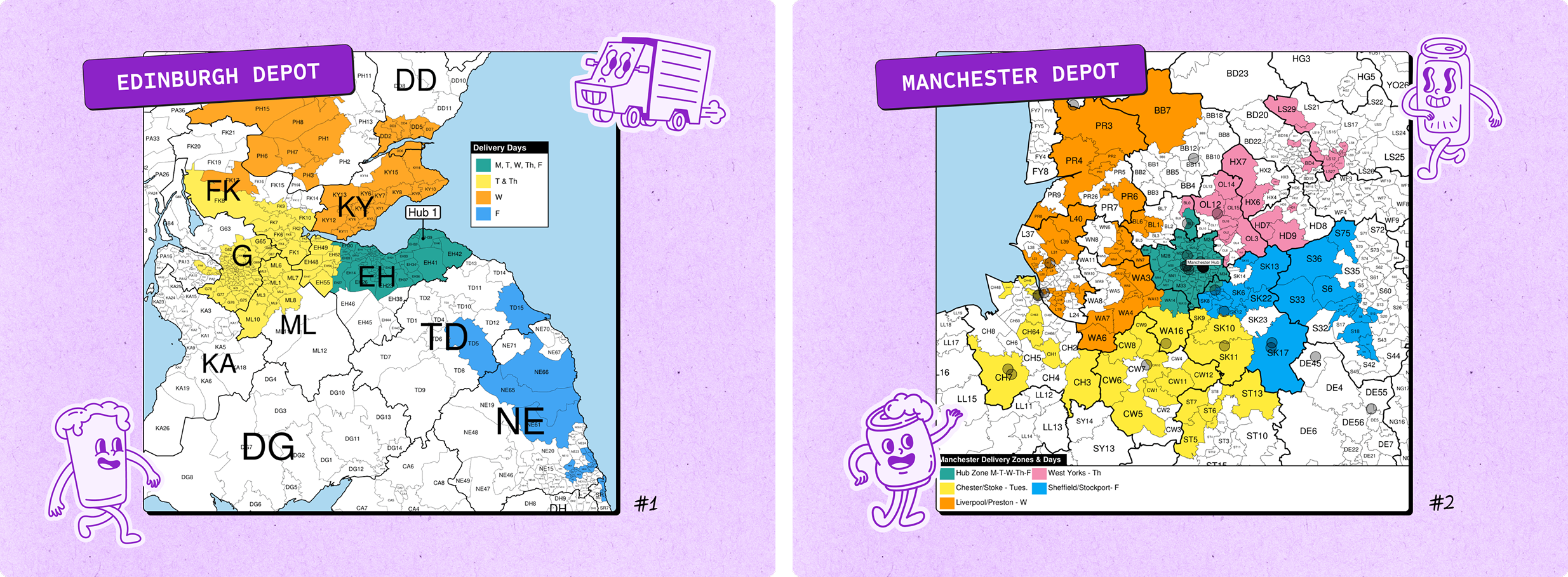
Together they operate across the Central Belt of Scotland and the North West, with active coverage across cities including Manchester, Liverpool, Leeds, Glasgow, Edinburgh, Dundee, Aberdeen and Newcastle.
Depot #3 is already in progress.
A huge amount of work has gone into this.
When you’re building something new, off-the-shelf logistics software doesn’t really cut it. Traditional distributors generally operate around owned stock, relatively fixed product catalogues and linear fulfilment flows.
Sellar Distribution is a bit more complicated.
Traditional wholesalers might operate across 3-4k SKUs. Sellar already operates across 20k+.
Some products are collected directly from suppliers. Some are palletised into depots. Some are stored locally. Orders can contain products from multiple suppliers entering the network through multiple fulfilment methods, all arriving in a single consolidated delivery to the buyer.
That has meant building:
- supplier workflows directly into the Sellar platform
- collection and delivery planning tools
- stock movement tracking systems
- delivery date calculation engines (more complicated than it sounds)
- a new buyer ordering experience
- a dedicated driver app
Alongside the actual operation that sits underneath this.
And… almost everything we’ve built so far is still evolving.
We’re iterating constantly based on the feedback coming from suppliers, buyers, warehouse teams and drivers.
It’s working
There’s still a very long way to go.
But what’s most encouraging is that things are beginning to work before our network of depots are even properly connected.
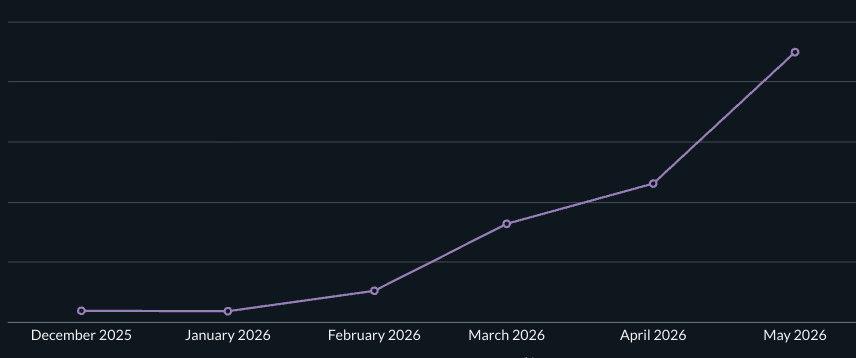
Right now, each depot largely operates as a standalone regional operation.
They are functioning more like integrated regional porterage than our vision of a fully connected national network.
Which means the real magic still sits ahead of us.
At the moment, Sellar Distribution is working particularly well for:
- Suppliers with enough volume in a given region to palletise that week’s orders into our depots
- Suppliers with smaller SKU counts that we can efficiently store and fulfil
- Suppliers within our collection zones who:
- want wider regional reach
- are hitting capacity limits within their own dray operations
- want us to take on less efficient routes
- want to fully outsource direct delivery operations
At the same time, we’re also very aware of the current limitations.
With only two depots live, there are still too many makers that we can’t yet properly support. And even for suppliers already using Sellar Distribution, reach is still largely limited to the regions our depots currently operate within.
What comes next
The vision for Sellar Distribution remains clear:
A pub, bar or bottle shop anywhere in the country should be able to order any product, from any drinks maker by Monday morning, and receive that order, alongside any others, by the weekend.
And this should cost suppliers no more than 10%.
Making that possible requires two things.
The first is obvious: more depots.
More depots immediately expand the reach of suppliers palletising weekly orders and using storage models.
But that only solves the problem for some suppliers.
The second, and arguably more important piece, is properly connecting each depots together.
Most suppliers will rely on collections. And right now, collection-based fulfilment remains largely regional. National reach only really becomes economically viable once smaller order volumes can move efficiently between depots as part of much larger consolidated flows of freight.
That’s the point where a keg collected in Glasgow can economically end up in Cardiff alongside hundreds of other products already moving through the network.
That’s when the magic starts to happen. And that’s exactly what comes next.
Depot #3 is already in progress, while the team are simultaneously building the systems and operation required to properly connect our network of depots together.
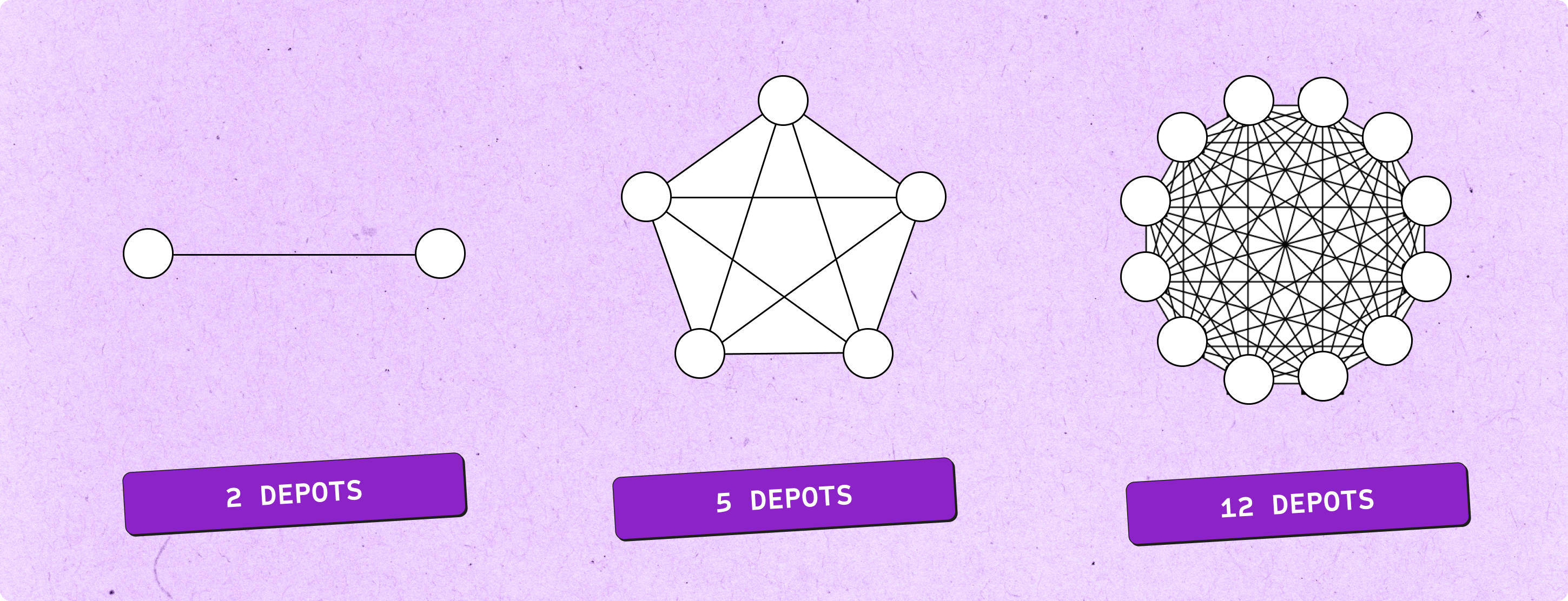
Once cracked, we believe the pace at which we can open new depots will accelerate.
The sooner we cover costs in one depot, the sooner we can open the next.
And every additional depot makes the network more valuable for everyone already using it.
We’re still early. But for the first time, it’s starting to feel less like a crazy idea and more like the foundations of a national network.
Written by Julian Bourne
Co-founder
Julian@sellar.io
Related News
Delivered by Sellar is coming to more of the UK
Sellar Distribution is our specialist drinks delivery network, giving buyers free, consolidated deliveries with no minimum order quantities. Live now in Scotland and the North West, it’s rolling out across the UK, with Bristol opening in October and four more depots planned next year.

.jpg)
How Verdant Is Growing Direct Sales Across the UK with Sellar Distribution
By sending stock into Sellar Distribution depots each week, Verdant Brewing gives customers in Scotland and the North West, the ability to buy direct from the brewery while enjoying a reliable local dray delivery service instead of courier or pallet deliveries.
.jpg)
How Cloudwater Simplified Deliveries and Improved Customer Service with Sellar Distribution
Cloudwater replaced its in-house dray operation with Sellar Distribution, reducing operational overhead, improving service levels across Greater Manchester, and allowing the team to focus on what they do best - making and selling great beer.
.jpg)
What We Learned From Shipping Over 500,000 Packages Through Couriers
After shipping 500,000+ deliveries through courier networks, we've learned that the cheapest route to market isn't always the best one. This post explores the hidden costs of courier distribution, the risks of relying on infrastructure you don't control, and why we're investing heavily in a specialist drinks distribution network built specifically for hospitality.