What We Learned From Shipping Over 500,000 Packages Through Couriers
After shipping 500,000+ deliveries through courier networks, we've learned that the cheapest route to market isn't always the best one. This post explores the hidden costs of courier distribution, the risks of relying on infrastructure you don't control, and why we're investing heavily in a specialist drinks distribution network built specifically for hospitality.

.jpg)
For the last few years, Sellar has relied heavily on courier networks.
In many ways, they've been one of the biggest enablers of growth in the drinks industry. They've allowed breweries to sell directly to trade customers nationwide, creating access to markets that would previously have been uneconomical to serve without relying on wholesalers to take on and distribute their products.
A large part of Sellar's own growth was built on top of that infrastructure. On behalf of our suppliers, we've shipped over 500,000 kegs, casks, cases of cans and bottles through courier networks across the UK, and they've played an important role in helping suppliers grow their businesses. Their nationwide coverage opened up opportunities to reach customers in every corner of the country, while offering a route to market at a cost significantly lower than traditional wholesaler margins.
For many suppliers, it was a simple plug-and-play route to market that made national growth possible from day one.
But over time, we've also come to understand the limitations of the courier model and the challenges that come with building part of your business on infrastructure you don't control.
Rates change. Surcharges appear. Policies evolve. Weight restrictions are adjusted. Entire product categories can become commercially unviable. What's viable one year can look very different the next.
We saw this first-hand last year (2025) when a large carrier we'd been working with for years changed its position on heavy parcels, effectively restricting a large proportion of the products sold through Sellar. Overnight, we found ourselves having to find alternative distribution routes, and many suppliers were forced to adapt alongside us as a result. Nothing had changed about the product. Nothing had changed about customer demand. But the economics and practicality of the route-to-market had changed around us.
The infrastructure isn't yours, and the decisions aren't yours either.
Then there are the costs that appear once you look beyond the headline shipping rates. Most delivery comparisons start and end with the shipping rate itself. But anyone who ships regularly with third parties knows that's rarely the whole story.
Alongside the shipping charge come the flurry of surcharges and the operational overhead that comes with managing frequent issues with deliveries at scale. There are damaged products, lost shipments, delays and missed deliveries, and the time spent investigating issues.
.png)
Individually, these costs can seem relatively minor. Collectively, they add up quickly.
The bigger cost, however, is reliability.
In hospitality, a failed delivery can mean far more than a minor inconvenience. It can leave a pub without stock for a busy Saturday night or leave a venue with a box of smashed glass bottles that can't be served or sold. Those are moments operators simply can't afford, and they're often unforgivable from the customer's perspective. Every delivery issue creates friction, and over time that friction impacts customer trust.
We've seen every issue imaginable over the years. None of this is unique to any particular carrier, it's simply the reality of moving large volumes of freight through unspecialised national networks.
The challenge is that hospitality has requirements that don't always fit neatly into that model.
Pubs, bars and restaurants need a level of flexibility and service that goes beyond getting a box from A to B. Reliability matters. Delivering during opening hours matters. Access matters. Cellar deliveries matter. Collecting empties matters. The overall experience matters.
That's where we've increasingly found that reliability, consistency and control are often worth far more than the difference between two delivery prices on a spreadsheet.
It's also one of the reasons we've spent the last year investing so heavily in Sellar Distribution, because we're convinced that hospitality deserves infrastructure designed specifically around its needs.
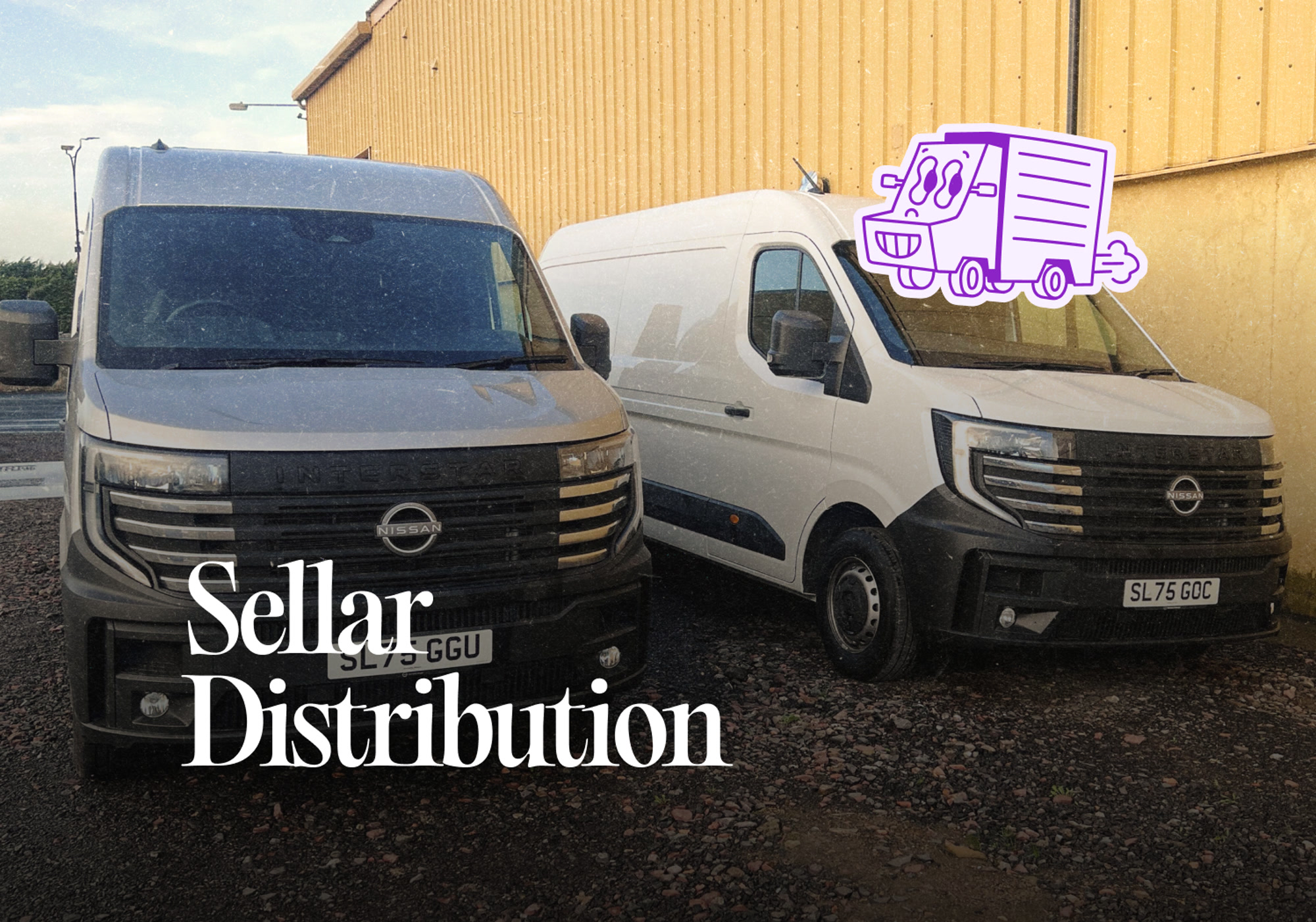
With Sellar Distribution, collections & deliveries are handled by our own drivers, in our own vans, using our own purpose built software. Deliveries can be split or consolidated and timed for individual opening hours. Kegs are delivered into the cellar rather than left at the kerbside. Empty kegs are collected. Gate codes and access instructions are followed. Customers see the same vehicles and specially trained drivers week after week.
Perhaps most importantly, the network only carries our freight. There are no handovers between multiple carriers, no mixed-freight hubs and no third-party depots handling products they've not been trained to handle.
The result is a very different service level.
After shipping more than 500,000 items through courier networks, we've learned that the cheapest route to market and the best route to market aren't always the same thing.
The cheapest delivery isn't usually the one with the lowest shipping charge.
It's the one that arrives on time, in full, without damage, and doesn't give your customer a reason to order elsewhere next week.
Written by Matt Pritchard
matt@sellar.io
Co-Founder
Related News
Delivered by Sellar is coming to more of the UK
Sellar Distribution is our specialist drinks delivery network, giving buyers free, consolidated deliveries with no minimum order quantities. Live now in Scotland and the North West, it’s rolling out across the UK, with Bristol opening in October and four more depots planned next year.

.jpg)
How Verdant Is Growing Direct Sales Across the UK with Sellar Distribution
By sending stock into Sellar Distribution depots each week, Verdant Brewing gives customers in Scotland and the North West, the ability to buy direct from the brewery while enjoying a reliable local dray delivery service instead of courier or pallet deliveries.
.jpg)
How Cloudwater Simplified Deliveries and Improved Customer Service with Sellar Distribution
Cloudwater replaced its in-house dray operation with Sellar Distribution, reducing operational overhead, improving service levels across Greater Manchester, and allowing the team to focus on what they do best - making and selling great beer.
.png)